Greek Goddesses: Gaia, Rhea and the Olympians
October 25, 2026
GREEK GODDESSES, daughters of the Great Mother: Gaia, the Earth, Rhea, the mother of the gods, Hera, Athena, Artemis, Aphrodite, Demeter, Persephone, Hestia and Hecate
The goddesses of Greece are older than Olympus. Beneath the images of the Olympian family live on the mother and fertility goddesses of Crete, Anatolia and the eastern Mediterranean. Their story is the passage from archaic, matrilineal and matriarchal societies and religions to patriarchal cultures shaped by logic and rule. In Greece this path can be read in every great goddess: the Great Mother became the wife, daughter or virgin of a father of the gods, and yet her old power stayed alive in her myths.
Gaia and Nyx: the first goddesses
At the beginning there was Chaos, and then came wide-bosomed Earth, Gaia. Out of herself Gaia bore the starry sky, Ouranos, the mountains and the sea, and with Ouranos she bore the Titans. She is the mother of all, who feeds every creature on the land, in the sea and in the air. Every spring that rises from the ground, every grain and every tree comes from her body.
Nyx, the Night, also came out of Chaos. She is the mother of Sleep and Death and of the Fates, and even Zeus feared to anger her.
Rhea, the mother of the gods
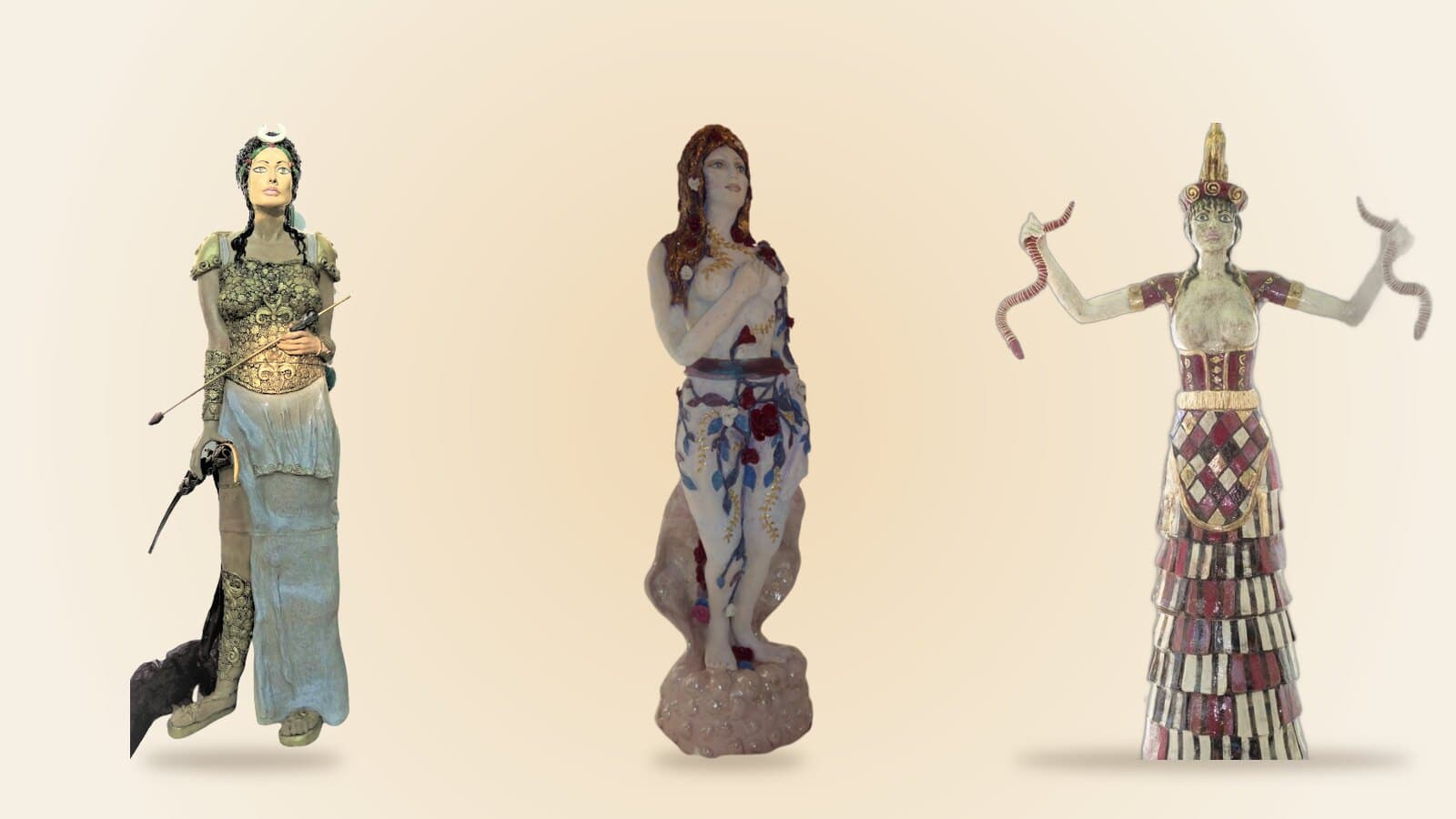
Rhea (also Rheia) is the Titaness and wife of Kronos. Because Kronos devoured all his children, the pregnant Rhea fled to Crete. There, in a secret cave, she gave birth to her youngest son Zeus and saved him by handing Kronos a stone wrapped in swaddling clothes. Rhea was honoured on Crete as a mighty mountain mother and earth goddess, whose roots reach directly back into the Minoan age. Rhea inherited the attributes of the Minoan earth goddess: the deep bond with Crete, the protection of birth and the rule over the forces of nature. The famous Minoan Snake Goddess is an early form or an aspect of the earth goddess Rhea. The Snake Goddess and the homage sculpture. The atelier makes Rhea as a goddess pendant.
Her Titan sisters carry the same old power: Themis, divine law and order, and Mnemosyne, Memory, mother of the nine Muses. Leto, the daughter of Koios and Phoibe, is the mother of Apollo and Artemis.
The Olympian goddesses
- Hera: Queen of heaven and goddess of marriage, mother of Hebe, Ares and Eileithyia, the goddess of birth. Her bird is the peacock, and the eyes of the watchful Argus shine on its tail. Each year she bathes in a sacred spring and rises from it as a maiden again: so the life of woman renews itself in her in the circle of the year.
- Athena: Goddess of wisdom, of crafts and of the protection of her city Athens. The women of Athens wove a new robe for her, and the olive tree is her gift to the city. She sprang from the head of Zeus after he had swallowed her mother Metis, whose name means wise counsel. Her bird is the owl, the bird of wisdom and of the lunar mysteries.
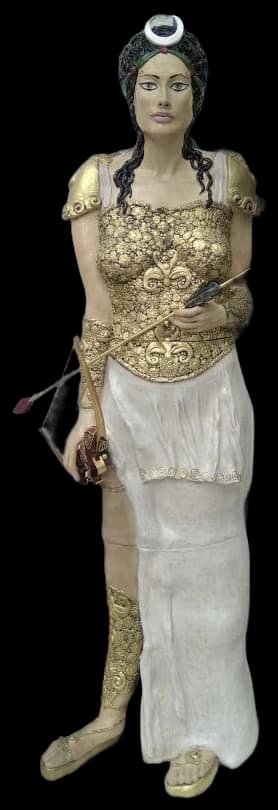
- Artemis: The goddess of the hunt, the forest, the wilderness, birth and the moon, and the protector of women and children. She is the daughter of Zeus and Leto and the twin sister of Apollo. In her oldest layer Artemis is a prehistoric goddess of nature and the wild, Potnia Theron, the great goddess of the wild beasts. In Ephesus she merged with the Anatolian Great Mother, in Brauron young girls danced for her as "she-bears", and in the mountains she leads the round dances of the nymphs. Artemis and her sculpture.
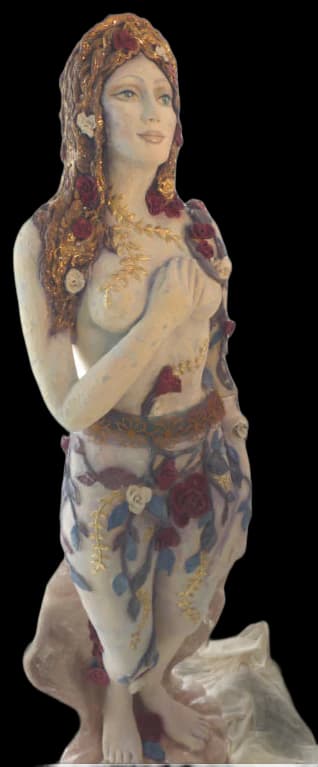
- Aphrodite: The goddess of love, beauty and sensual desire. She was born from the white foam (aphrós) of the sea and came ashore near Cyprus, or, in the other ancient version, she is the daughter of Zeus and the Titaness Dione. Her roots lie in the older mother and fertility goddesses of the Near East, in Inanna and Astarte, and in Sparta she was honoured as a goddess of war. Aphrodite and her sculpture.
- Demeter and Persephone: Demeter, daughter of Rhea, is the goddess of grain and of the harvest. While her daughter Persephone was picking flowers, Hades, the lord of the underworld, carried her off. Demeter searched for her with torches, and Hecate, who had heard the girl's cry, went with her. In her grief Demeter let the earth bear nothing, until Zeus agreed that Persephone should return. Because Persephone had tasted a pomegranate seed, she spends a third of each year below and two thirds with her mother. Demeter then gave back fruitfulness to the fields and taught her mysteries at Eleusis. In the Goddess tradition, Persephone, Demeter and Hecate form the Triple Goddess: maiden, mother and wise old woman.
- Hestia: The eldest daughter of Rhea, goddess of the hearth and the home. No feast was complete without an offering poured to her first and last.
Hecate, Selene, Eos and the goddesses of the sea
- Hecate: Zeus honoured her above all and gave her a share of earth, sea and starry sky. She is the goddess of crossroads, of the night and of magic, often shown in triple form, with torches in her hands.
- Selene: The moon herself, sister of Helios, the sun. She loved the shepherd Endymion, who sleeps forever.
- Eos: The rosy-fingered dawn, who rises every morning at the edge of the world. The atelier has made Eos as a white ceramic head with roses.
- The Nereids: The fifty daughters of the sea god Nereus, among them Thetis and Amphitrite. The atelier has made a Nereid with dolphins.
- Alcyone: She lost her husband Ceyx at sea, and the gods turned both into kingfishers. The calm "halcyon days" of winter carry her name. The atelier's Halcyon is a bust with roses and a bird.
- The Muses, the Fates and the Graces: The nine Muses, daughters of Zeus and Mnemosyne, give poetry, music and knowledge. The three Fates, Clotho, Lachesis and Atropos, spin, measure and cut the thread of life. The three Graces embody beauty and joy.
The goddesses in image, feast and ritual
The Greeks gave their goddesses temples, statues and festivals. The famous statue of Artemis of Ephesus has many breasts. They symbolise the ancient fertility of the Anatolian Great Mother, which is very different from the virgin huntress of Olympus.
The women honoured Demeter at the time of sowing with their own feasts, to which no man was admitted. The fire of Hestia burned in every house and in the heart of every city, and whoever founded a new city carried her fire there. Doves circled around the sanctuaries of Aphrodite. In the snake goddesses of Crete the oldest of all these images lives on: the Great Mother with the power of the earth in her hands.
Greek and Roman names
- Hera: Juno
- Athena: Minerva
- Artemis: Diana
- Aphrodite: Venus
- Demeter: Ceres
- Hestia: Vesta
- Persephone: Proserpina
- Gaia: Terra or Tellus
Greek goddesses in clay
All of RHEAsilvia's goddesses are hand-built ceramic, built hollow in parts, each one unique.
- Artemis: 175 cm, three parts, fired twice.
- Aphrodite: 175 cm, two parts, fired twice.
- Snake Goddess, homage to the Minoan Snake Goddess: 185 cm, three parts, fired three times.
The atelier has also made Eos, a Nereid and Halcyon, and Aphrodite exists as a small ceramic goddess. You can see all the goddesses in the overview. If a goddess who is not yet among them speaks to you, a commission is possible.
Frequently asked questions
Who is the mother of all Greek goddesses?
Gaia, the Earth, the mother of all, from whom the Titans and through them the Olympian gods descend. Rhea, her daughter, is the mother of Hestia, Demeter, Hera and Zeus.
Who is the Greek goddess of love?
Aphrodite, goddess of love, beauty and sensual desire, born from the foam of the sea. In her live on the older goddesses of love Inanna and Astarte.
Who is the Greek goddess of the moon?
Selene is the moon herself. Artemis and Hecate are also goddesses of the moon, and with them the moon shows its three faces.
Who is the Greek goddess of wisdom?
Athena, goddess of wisdom and of crafts, with the owl as her bird.
Inspiration
- Barbara G. Walker, The Woman's Encyclopedia of Myths and Secrets
- Anne Baring and Jules Cashford, The Myth of the Goddess
- Robert von Ranke-Graves, The Greek Myths