Celtic Goddesses: Danu, Cerridwen and Brigid
October 25, 2026
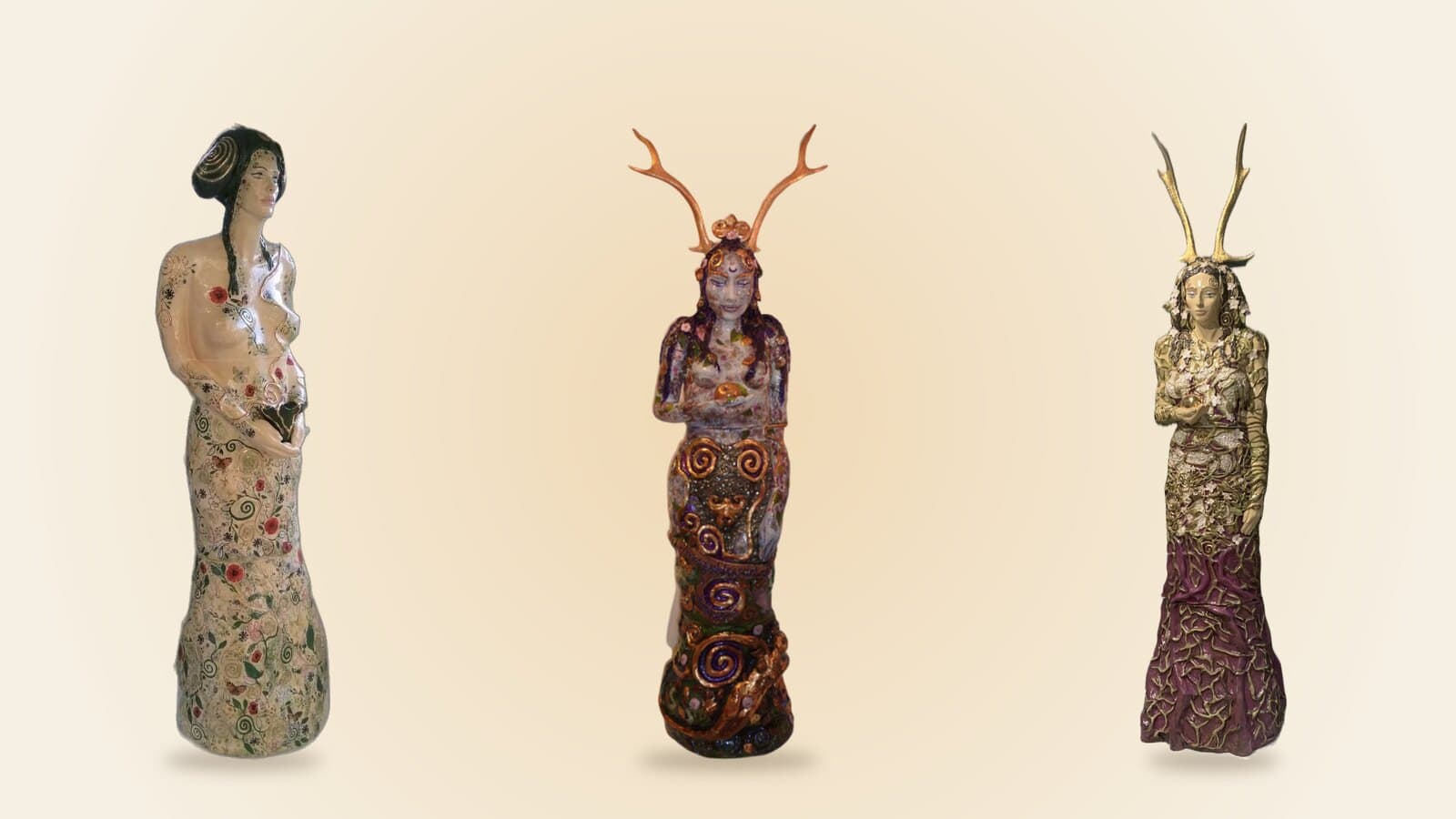
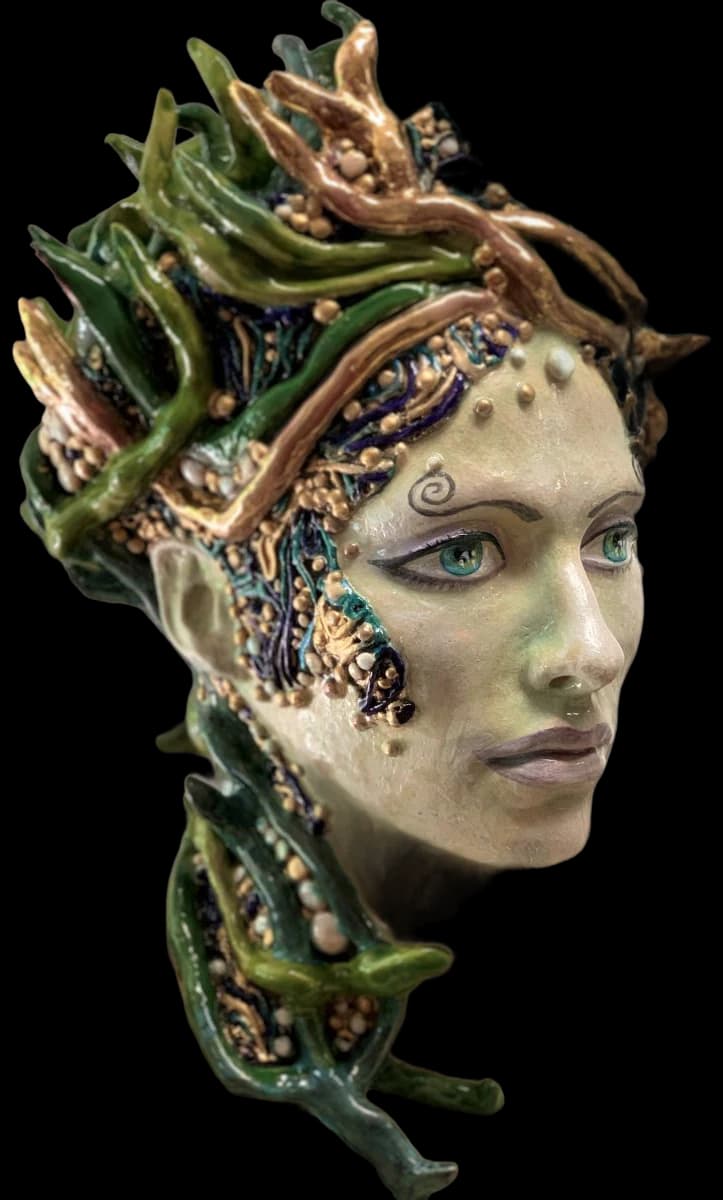
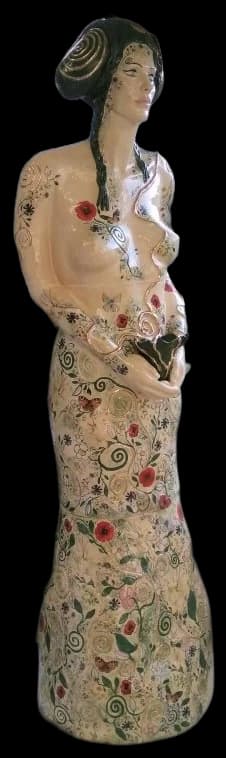
"Celtic goddesses" sounds like a single family of deities. In fact the name covers many peoples, languages and centuries. Most of what we know comes from two kinds of sources: inscriptions and images from the Roman period, and medieval Irish and Welsh texts written down by Christian scribes, often long after the beliefs they describe. Every portrait below is therefore partly a reconstruction. This article introduces selected goddesses, the texts that name them, and the sculptures of them by Silvia Steiger.
Danu and Anu: the mother behind a people
The divine race of Irish legend is called the Tuatha Dé Danann, usually translated as "the folk of the goddess Danu". Her name is reconstructed by modern scholars and not directly attested in that form in medieval Irish texts, which speak of Dana and Ana as mother of the gods. No story about her survives. Explore Danu's sources and sculpture.
Cerridwen and the cauldron
Cerridwen belongs to the Welsh Tale of Taliesin, first attested in a sixteenth-century manuscript. Her tale features a cauldron of knowledge and a shape-shifting chase that ends with the rebirth of the poet Taliesin. Reading her as a goddess of transformation is a modern interpretation. Explore Cerridwen's story and sculpture.
The Lady of Avalon
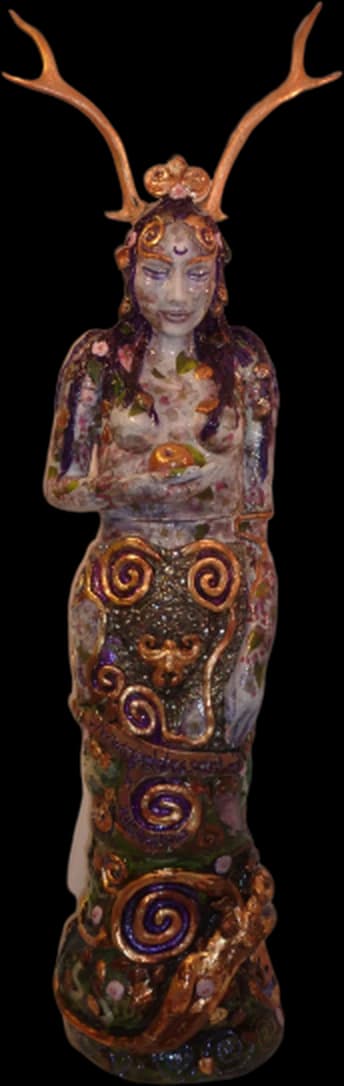
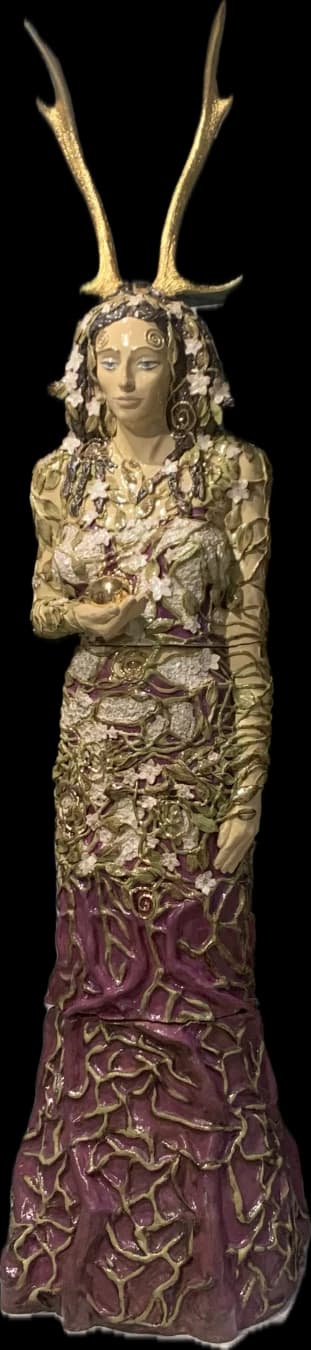
Avalon, the Isle of Apples, comes from Arthurian legend. Geoffrey of Monmouth describes Morgen and her eight sisters ruling the island, without naming a goddess "Lady of Avalon"; the Lady of Avalon as a goddess of the land is a modern, artistic interpretation. Silvia Steiger created two sculptures of her: Lady of Avalon I and Lady of Avalon II.
Other Celtic goddesses
Several well-known goddesses have no sculpture on this site yet. Their sources are just as worth knowing.
Brigid
Cormac's Glossary describes Brigit, daughter of the Dagda, as "the goddess whom poets adored". It names two sisters of the same name, one linked with healing and one with smithcraft.
The Morrígan, Badb and Macha
The Book of Invasions names Badb, Macha and the Morrígan as daughters of Ernmas, and gives Danann as an additional name of the Morrígan. In later tradition and in modern scholarship, the Morrígan is linked with battle and prophecy, which is why she is often called the warrior goddess of Irish myth.
Ériu, Banba and Fódla
The same text names three daughters of Fiachna: Ériu, Banba and Fódla. They are often called the three goddesses of Ireland. The name Ériu lives on in Éire, the Irish name of the country.
Rhiannon
In the first branch of the Welsh Mabinogion, Rhiannon introduces herself as the daughter of Heveydd Hen. Falsely accused of killing her infant son, she is sentenced to sit daily for seven years by a horse block outside the gate and to offer to carry guests on her back. Her son returns and is named Pryderi.
Epona
Epona was a Gallo-Roman goddess of horses. Images show her riding side-saddle or with foals. Some scholars compare her with Rhiannon, who is also closely linked with horses.
Who is the most powerful Celtic goddess?
These sources establish no single most powerful Celtic goddess. The medieval texts call Dana and Ana the mother of the gods, but that is a family role, not a ranking.
Celtic goddesses in clay
Silvia Steiger has created monumental ceramic sculptures of Danu, Cerridwen and two Ladies of Avalon. You can see all the goddesses in the overview. If a goddess who is not yet among them speaks to you, a commission is possible.