Sun Goddesses: Sól, Amaterasu and Saulė
October 25, 2026
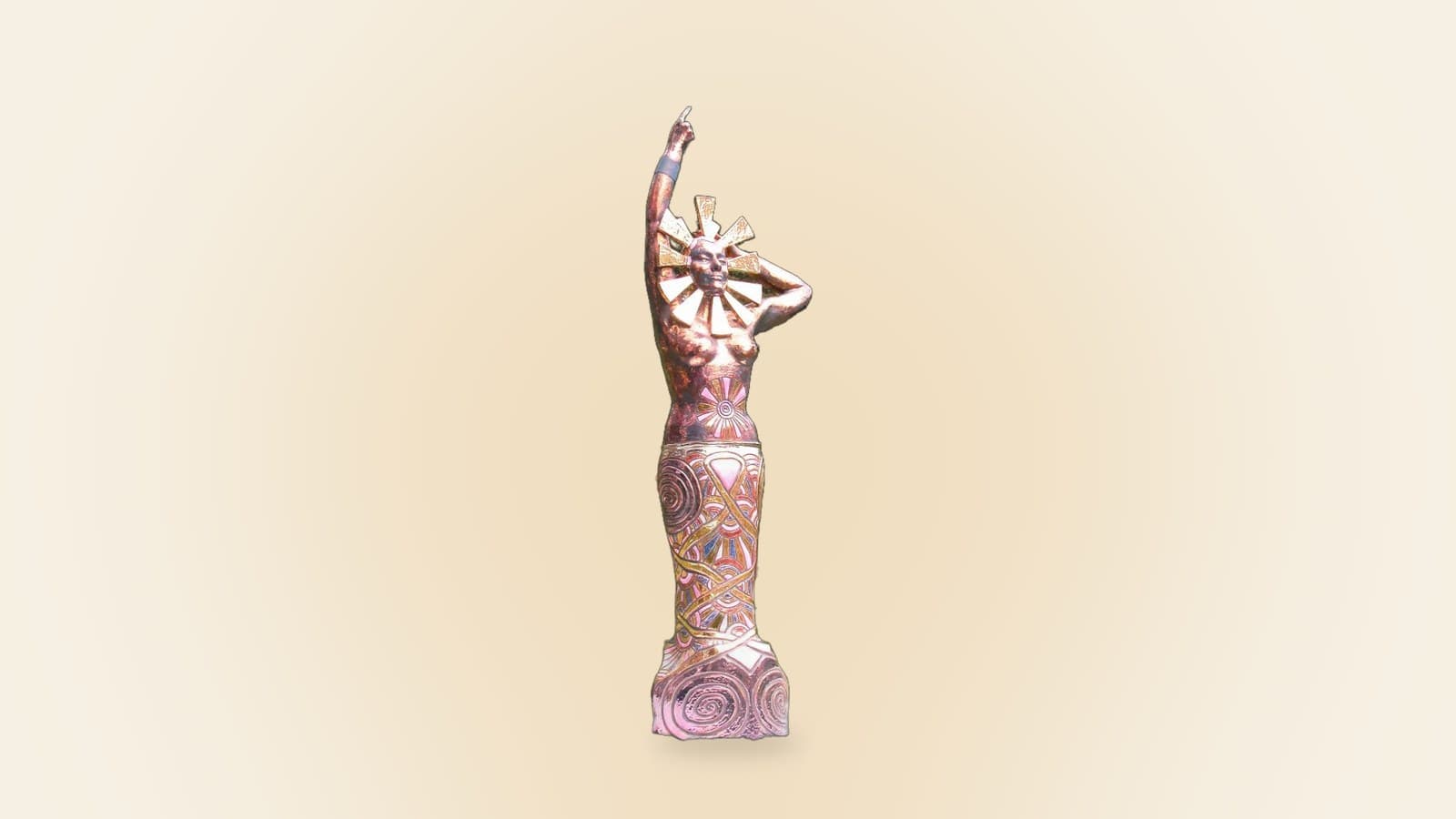
In German the sun is feminine: die Sonne. In several old traditions she is also a goddess. In Snorri Sturluson’s Prose Edda, Mundilfari has two children so fair that he calls his son Moon and his daughter Sun, Sól. The angry gods set both in the sky, and Sól must drive the horses Árvakr and Alsviðr, which draw the chariot of the sun. A wolf named Sköll runs after her, and one day he will catch her. Yet the Poetic Edda promises that she will first bear a daughter, who will tread her mother’s paths when the gods have died.
Amaterasu in Japanese mythology
In Japan, the Kojiki, completed in 712, tells of the Sun Goddess Amaterasu, the “Heaven-Shining-Great-August-Deity” in Basil Hall Chamberlain’s translation. She is born when the god Izanagi washes his left eye, and he gives her the Plain of High Heaven to rule. Terrified by a misdeed of her brother, she shuts herself in the Heavenly Rock-Dwelling: “Then the whole Plain of High Heaven was obscured and all the Central Land of Reed-Plains darkened.” Only when the deities outside laugh and hold up a mirror to her does she gradually come forth again.
Saulė and the Sun Goddess of Arinna
Scholarly overviews report two more sun goddesses. In the Baltic lands she is Saulė in Lithuanian and Saule in Latvian, whose name is also the ordinary word for the sun in Lithuanian and Latvian, and folk songs portray her dancing in gilded shoes on a silver hill. Among the Hittites, the Sun Goddess of Arinna was the chief goddess, who protected the kingdom and was called “Queen of all lands”.
Sól, her horses and the sun’s daughter
Snorri’s account distinguishes the sun’s light from the figure who guides its course. The gods make the solar vehicle from sparks coming from Muspelheim, then set Sól to drive its horses. Under the horses they place cooling devices, rendered as wind-bags in Anderson’s translation. This is an ordered arrangement of light, heat and movement, rather than a description of the goddess as the fiery object alone. As a modern reading, it draws attention to the work of sustaining a course: daylight depends on a journey that must continue.
Grímnismál makes the danger of that light especially vivid. After naming the horses, the poem places the shield Svalinn before the sun. Mountains and sea would burn if it fell away. The sun’s power therefore needs protection and measure as well as admiration. This is a feature of the poem’s imagery, not a scientific explanation of solar heat. Read alongside a modern Sun Goddess, it leaves room for a fuller idea of light: something life-giving that is also too powerful to meet without a boundary. The final comparison is a contemporary interpretation.
The prophecy of the sun’s daughter also deserves to be read in its own words and setting. Vafþrúðnismál names the sun Álfröðull in the answer about her successor. She bears a daughter before Fenrir takes her, and the daughter follows her mother’s paths after the gods have died. The poem names Fenrir here; Snorri’s earlier pursuit account names Sköll. Keeping the witnesses separate preserves the detail of each text. A modern reading can find continuity in the inherited path without pretending that the two passages give an identical account of the pursuing wolf.
Amaterasu and the return of sunlight
In the Kojiki, the return of light involves an entire gathering and things deliberately made. The deities commission a mirror and a string of curved jewels, arrange offerings on a tree and prepare a performance. The dancing deity makes the assembly laugh; Amaterasu’s curiosity brings her toward the entrance, where the mirror is presented. Another deity draws her out and a rope marks the limit behind her. This is more than a solitary sunrise image. In a modern reading, light returns through craft, attention and coordinated action as well as divine presence.
Amaterasu’s mirror, worship and art
The mirror also belongs to a living religious setting. Ise Jingu identifies Naiku as a shrine of Amaterasu-Omikami and describes the Holy Mirror enshrined in its main sacred palace as her symbol. This is the shrine’s own account of its worship, not proof that the events of the Kojiki occurred historically. It gives the literary object a specific religious context. The comparison should remain precise: neither the mirror nor Ise’s rites are claimed as features of RHEAsilvia’s sculpture.
Later art continues to choose particular moments from these stories. The Metropolitan Museum of Art holds a late-nineteenth-century pair of hanging scrolls by Kōno Bairei that brings the cave episode together with the Buddha’s final death. This is a specific later artistic juxtaposition, not evidence that all sun goddesses share one theology. The same care applies here: reading light, withdrawal and return through a contemporary ceramic goddess is a modern artistic interpretation. It can open a conversation with several traditions while allowing their names, sacred objects and narratives to remain distinct.
Frequently asked questions
Are there any sun goddesses?
Yes. Sól in Norse myth, Amaterasu in Japan, Saulė in the Baltic lands and the Sun Goddess of Arinna among the Hittites are all female deities of the sun.
Who is the sun goddess Sol?
In the Prose Edda, Sól is the daughter of Mundilfari. The gods set her in the sky to drive the horses of the sun, while the wolf Sköll pursues her. The Poetic Edda poem Vafþrúðnismál says that she will bear a daughter, who will follow her mother’s paths after the gods have died.
Who is the Japanese goddess of the sun?
Amaterasu, also called Ama-terasu-oho-mi-kami. Amaterasu means “shining in heaven”. The Kojiki, completed in 712, tells how she was born from the left eye of the god Izanagi and how the world grew dark when she hid in a rock dwelling.
Who is Sól’s daughter?
Vafþrúðnismál says that the sun bears a daughter before Fenrir takes her and that the daughter follows her mother’s path after the gods die. The stanza does not give the daughter a personal name. Álfröðull refers to the mother in this passage.
Why does the Norse sun need a shield?
Grímnismál says that Svalinn stands before the sun and that mountains and sea would burn if it fell. The image describes overwhelming heat held within limits. It belongs to the poem’s cosmology, not to modern astronomy.
Why is Amaterasu associated with a mirror?
In the Kojiki’s cave episode the deities make and present a mirror as part of bringing her out. Ise Jingu also identifies the Holy Mirror at Naiku as her symbol. Literary narrative and the shrine’s account of worship are related kinds of evidence, with different purposes.
See the sculpture: Sun Goddess
Sources
- Snorri Sturluson, Prose Edda: Gylfaginning, §§ 11–12, tr. R. B. Anderson, 1901 edition (Project Gutenberg)
- Poetic Edda, Vafþrúðnismál, stanza 47, tr. H. A. Bellows, 1923 (Wikisource)/Vafthruthnismol)
- Kojiki, tr. B. H. Chamberlain, 1882, section X: birth of the Sun Goddess (Wikisource)/Section_10)
- Kojiki, tr. B. H. Chamberlain, 1882, section XI: rule of the Plain of High Heaven (Wikisource)/Section_11)
- Kojiki, tr. B. H. Chamberlain, 1882, sections XV–XVI: the brother’s ravages and the Heavenly Rock-Dwelling (Wikisource)/Section_16)
- Kojiki, tr. B. H. Chamberlain, 1882, introduction: date and the Sun Goddess (Wikisource)/Introduction)
- Saulė, Baltic sun goddess (Wikipedia)
- Sun goddess of Arinna (Wikipedia)
- Duden: Sonne, die (grammatical gender)
- Sculpture facts: atelier RHEAsilvia
- Poetic Edda, Grímnismál 37–38, translated by Henry Adams Bellows, 1923: horses, cooling and the shield Svalinn/Grimnismol)
- Ise Jingu, About Ise Jingu, Naiku and Shogu: Amaterasu-Omikami and the Holy Mirror
- Metropolitan Museum of Art, Kōno Bairei, Luring the Sun Goddess Amaterasu Out of a Cave with Music; Death of the Historical Buddha, late nineteenth century