Norse and Germanic Goddesses: Freya, Frigg, Hel
October 25, 2026
Norse and Germanic are related terms with different scopes. The Norse tradition is recorded in Old Norse sources, including Snorri Sturluson's Prose Edda and the poems preserved in the thirteenth-century Icelandic Codex Regius, a principal manuscript of the Poetic Edda. Germanic is the broader term: it includes Norse traditions and continental evidence from texts, inscriptions, archaeology and later folklore. This article introduces selected goddesses, the texts that name them, and the sculptures of them by Silvia Steiger.
Freya
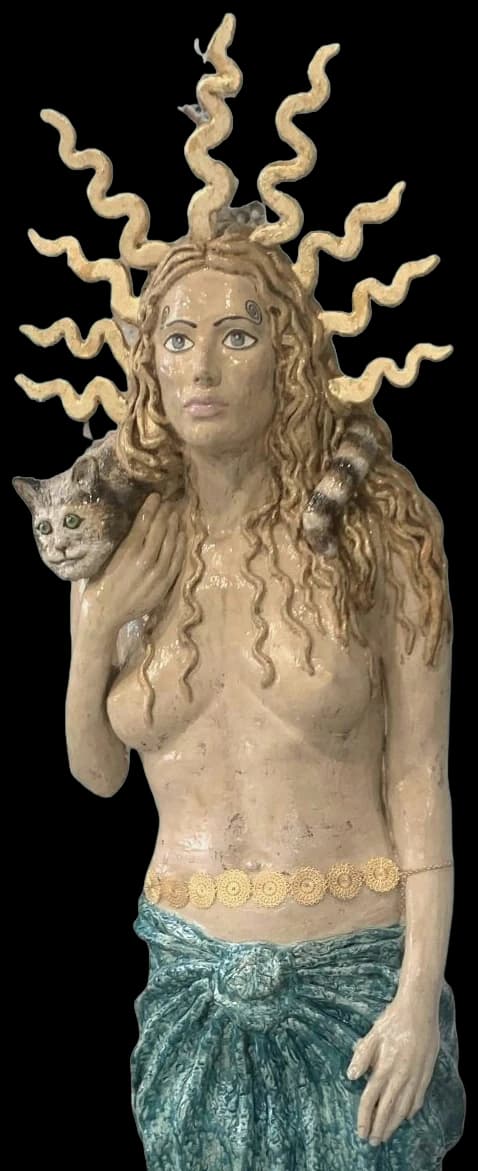
In Snorri's Edda, Freya is "the most famous of the goddesses". She is the daughter of Njörd and the sister of Freyr. Her dwelling is called Fólkvangr, and when she rides to battle, half of the slain belong to her. She drives a chariot drawn by two cats.
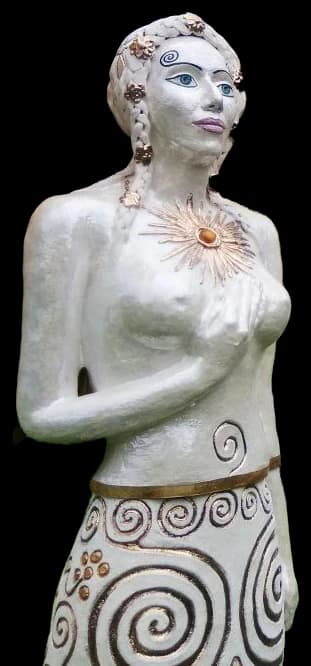
Silvia Steiger created two sculptures of her, where you can read more about her myths: Freya I, the white figure with spirals, and Freya II, with a cat on her shoulder. Both are 180 centimetres tall.
Frigg: the wife of Odin
Is Odin's wife Frigg or Freya? In Snorri's Edda it is Frigg: "Frigg is his wife, and she knows the fate of men, although she tells not thereof." Freya's husband is Óðr. Some scholars think that both goddesses go back to one older Germanic goddess, but this is debated.
Sif: the wife of Thor
Sif is the wife of Thor. Snorri tells that Loki once cut off all her hair. Thor seized him and would have broken every bone in his body, until Loki swore to have dark elves make Sif hair of gold that would grow like real hair. Her son Ull is called Thor's stepson. Old Norse poets even called gold "Sif's hair".
Hel
Hel is the daughter of Loki. Odin cast her into Niflheim and gave her power over nine worlds, to receive those who die of sickness or old age. Snorri describes her as half blue and half the colour of flesh, stern and grim.
Rán
Rán is the wife of Ægir, and they have nine daughters. She has a net in which she catches all who perish at sea.
Idun
Idun is the wife of Bragi, the god of poetry, and the keeper of the apples that the gods eat to stay young. Snorri calls the apples the medicine against old age. When the giant Thjazi carries her off, the gods begin to grow old.
The Norns: goddesses of fate
At the spring of Urd beneath the world ash live three maidens: Urd, Verdande and Skuld. "These maids shape the lives of men, and we call them norns." Every day they water the ash so that its branches do not wither. Snorri adds that there are more norns, who come to every child at birth.
Frau Holle: German folklore
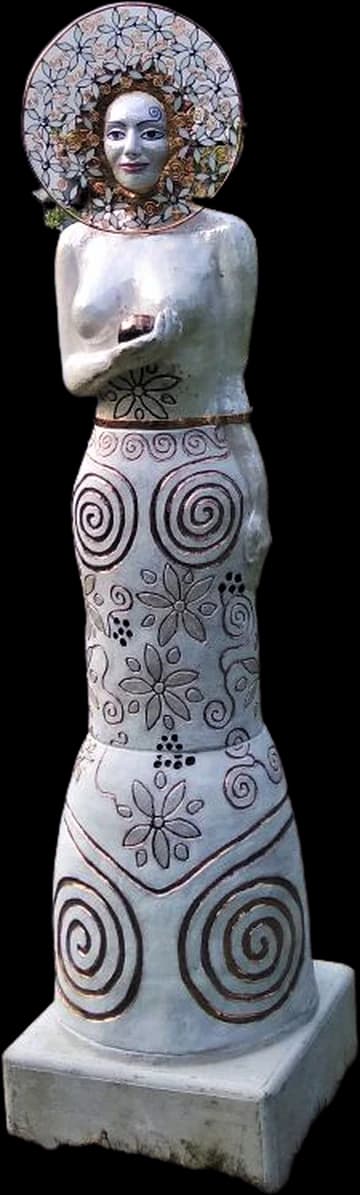
Frau Holle belongs to the folk belief of the German-speaking lands, not to the Old Norse tradition. The Brothers Grimm printed her fairy tale in 1812, but she is older: a thirteenth-century church text, quoted in later scholarship, mentions people setting a Christmas-night table for "Lady Holda". Jacob Grimm described her as a gentle, gracious goddess of spinning and household order, who goes about in the Twelve Nights of midwinter. Whether she was worshipped before Christianity is debated. Read more about Frau Holle and her sculpture.
Norse and Germanic goddesses in clay
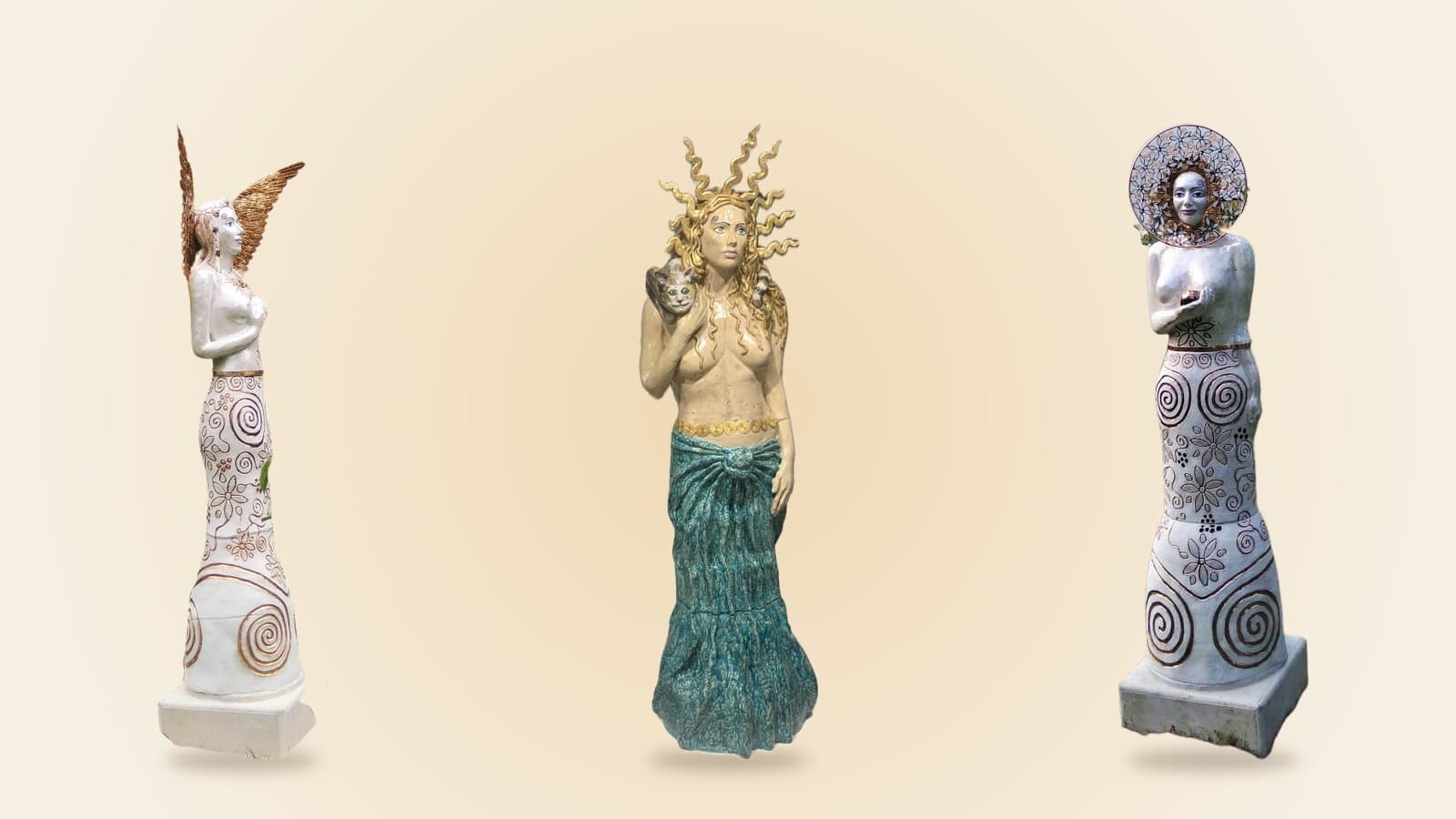
Silvia Steiger has created monumental ceramic sculptures of Freya I, Freya II and Frau Holle. You can see all the goddesses in the overview. If a goddess who is not yet among them speaks to you, a commission is possible.