Minoan Snake Goddess: The Goddess of Crete
October 25, 2026
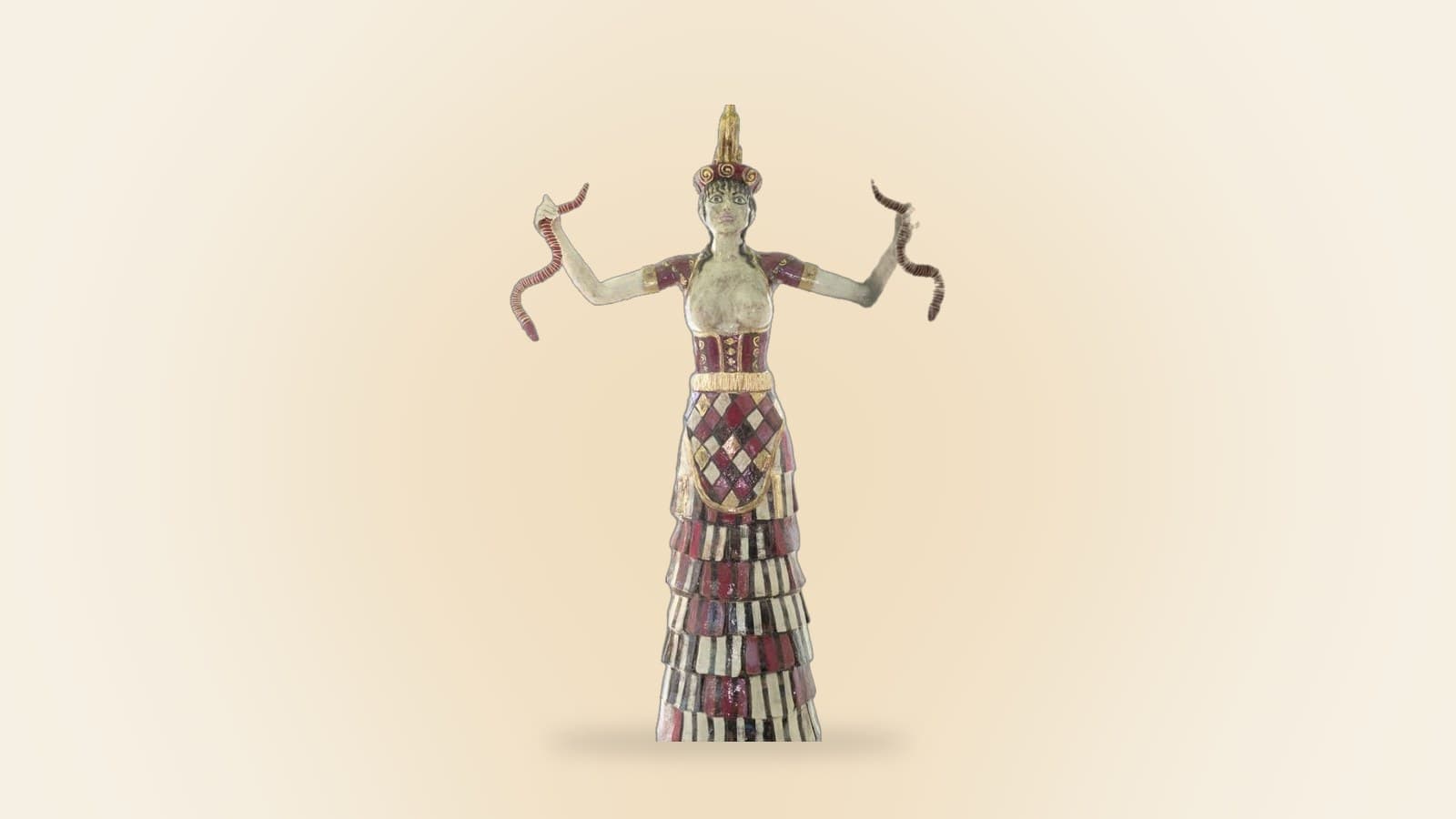
MINOAN SNAKE GODDESS, Cretan goddess of nature and motherhood, goddess of the earth and of renewal
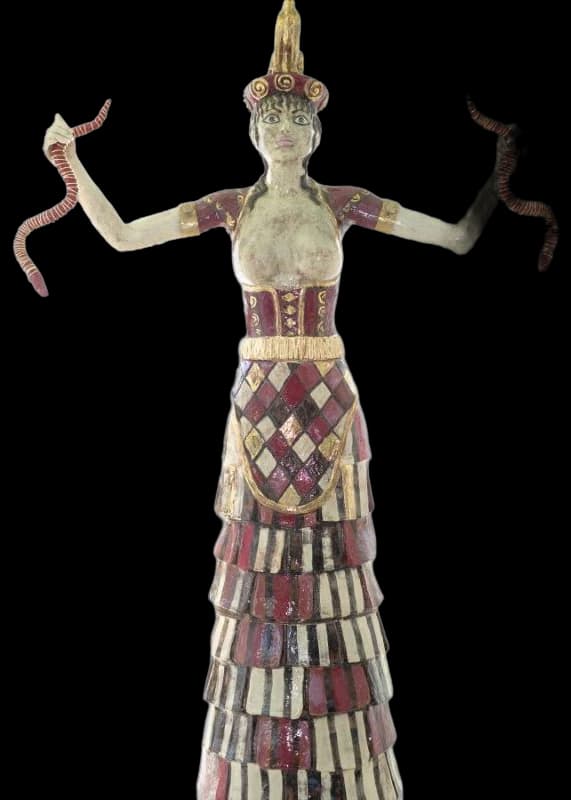
The world-famous statuettes of the Snake Goddess from the palace of Knossos on Crete show a Cretan goddess of nature and motherhood.
The goddess of Knossos
- Appearance: She wears the typical Minoan dress with a wide flounced skirt, a tightly laced wasp waist and deeply bared breasts. Snakes lie in her hands or wind around her body.
- Meaning: In the Cretan Bronze Age the snake was a symbol of the earth, of renewal (through the shedding of its skin), of life force and of the protection of the house. The bared breasts underline her role as a nourishing mother goddess and a symbol of fertility.
- The crown: On the larger statuette the snakes wind up her arms to her tall crown. The goddess stands upright and holds the power of the earth in her hands.
Snake and spiral
The snake winds like the spiral, the sign of becoming and passing away. She rises from the earth and from the water, and she carries the life energy that sleeps in springs, roots and seeds. When the goddess holds the snakes in her hands, she holds the cycle of life itself: the rising in spring, the ripening, the return into the earth and the renewal.
She is the Great Mother of Crete, who nourishes and protects, the goddess of the earth and of the house. In her the whole of Minoan life stands at the centre: the fields and the herds, the springs and the sea, the birth of the children and the protection of the home.
The snake: earth, shedding, renewal
The snake lives in the clefts of the earth, close to the springs and to the roots. She sheds her skin and comes forth renewed. So she carries the mystery of death and rebirth. In the houses of Minoan Crete she was a guardian, a blessing for the family.
Only later did the view of the snake change. In the biblical story the snake becomes the tempter, and the Christian church made her an image of evil. The old goddess with the snakes in her hands reminds us of the time when the snake was sacred.
From the Snake Goddess to Rhea
In the spiritual understanding, the famous Minoan Snake Goddess is an early form or an aspect of the earth goddess Rhea, who later, in Greek antiquity, was honoured as the “Mother of the Gods”.
The names Rhea, Crete and the Snake Goddess are closely woven together. They mark the passage from the old Cretan (Minoan) religion to classical Greek mythology.
When the Greek tribes absorbed the Minoan culture on Crete, they took over parts of its religion. The nameless Cretan “Great Mother” became, in later Greek mythology, the Titaness Rhea (also Rheia). Rhea inherited the attributes of the Minoan earth goddess: the deep bond with Crete, the protection of birth and the rule over the forces of nature.
- The Crete connection: Rhea is the wife of Kronos. Because Kronos swallows all his children, the pregnant Rhea flees to Crete. There, in a secret cave (the Idaean or the Dictaean Cave), she gives birth to her youngest son Zeus and saves him by handing Kronos a stone wrapped in swaddling clothes.
- Cult on Crete: On Crete, Rhea was honoured as a mighty mountain mother and earth goddess, whose roots reach straight back into the Minoan age.
RHEAsilvia carries the name of Rhea in her own name.
Homage to the Minoan Snake Goddess
The sculpture by RHEAsilvia is a “Homage to the Minoan Snake Goddess”. She is 185 centimetres tall, hand-built from clay in three parts and fired three times, a unique piece. The small statuettes of Knossos grow in her to the size of a woman.
See the sculpture: Snake Goddess
Frequently asked questions
Why does the Snake Goddess show her breasts?
The bared breasts show her as the nourishing mother. She gives life and food to all, as the earth nourishes everything that grows on her.
What do the snakes of the goddess mean?
The snake is a symbol of the earth, of renewal through the shedding of its skin, of life force and of the protection of the house. In Minoan Crete it was sacred.
What links the Snake Goddess with Rhea?
The nameless Cretan Great Mother became, in Greek mythology, the Titaness Rhea. Rhea inherited her bond with Crete, the protection of birth and the rule over the forces of nature. On Crete she gave birth to Zeus in a secret cave.
What does “Homage to the Minoan Snake Goddess” mean?
It is the title of the sculpture by RHEAsilvia: a 185 cm ceramic goddess that honours the Snake Goddess of Knossos.
Inspiration
- Marija Gimbutas, The Language of the Goddess
- Anne Baring and Jules Cashford, The Myth of the Goddess