Danu: Irish Goddess, Names and Sources
October 25, 2026
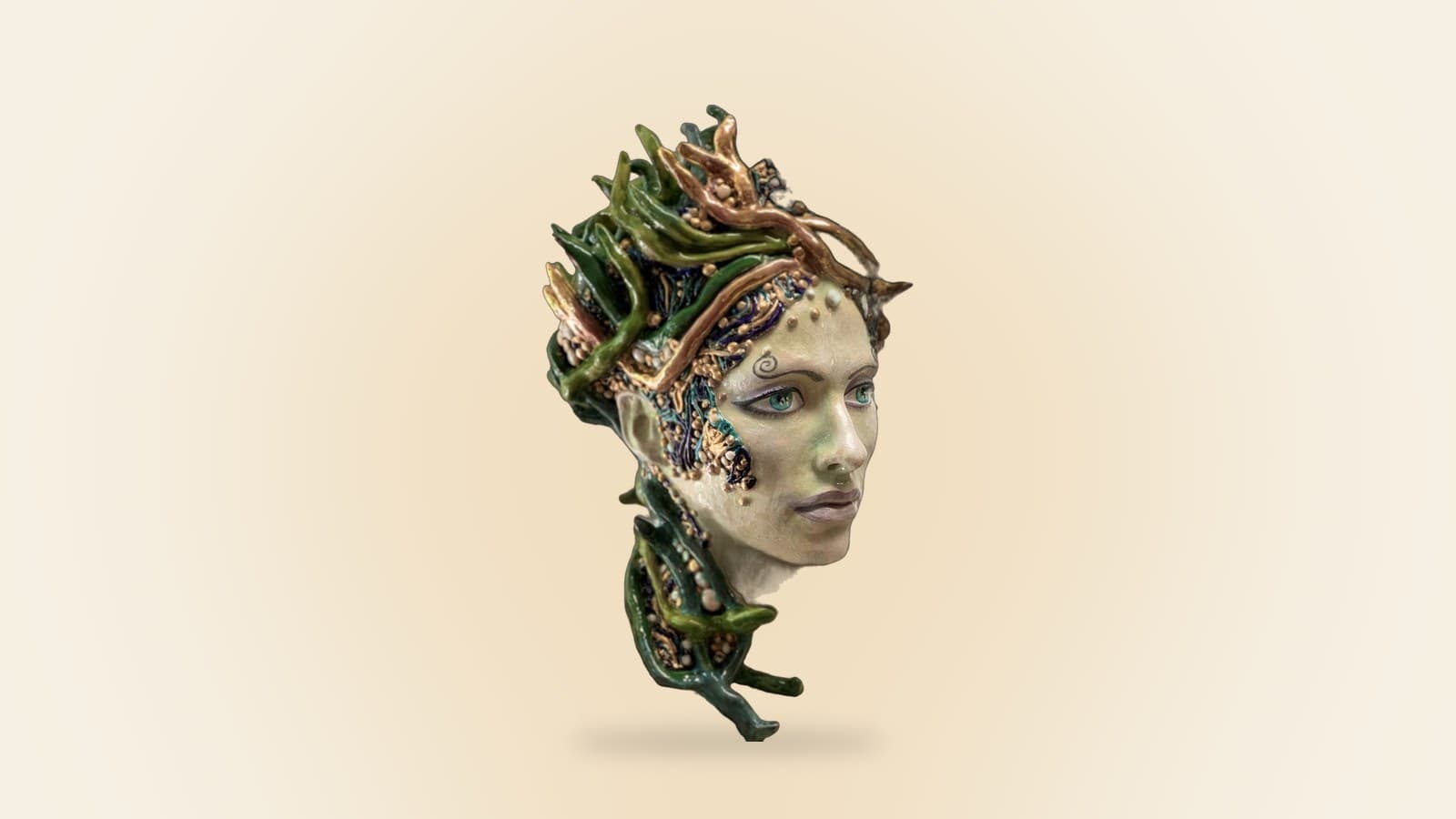
The gods of medieval Irish legend are called the Tuatha Dé Danann, a name usually translated as “the folk of the goddess Danu”. The Book of Invasions (Lebor Gabála Érenn) tells how they came to Ireland “without vessels or barks, in dark clouds over the air, by the might of druidry”. They landed on a mountain in Connacht and brought a darkness over the sun for three days and three nights.
Who is Danu?
Yet no medieval text names a goddess Danu. As the scholarly overview explains, the form Danu is a modern reconstruction from the genitive Danann, and no myth about her survives. The texts name related figures instead. The Book of Invasions says: “That Dana is mother of the gods”, and in another passage it derives the name of the Tuatha Dé Danann from Danann, an additional name of the Morrígan. Cormac’s Glossary calls Ana the mother of the gods of Ireland, “mater deorum hibernensium”, and says she nursed them well. Its 1868 edition records the form Anu in Stokes’s footnote; O’Donovan identifies the Two Paps of Ana as mountains in County Kerry.
Danu and the Danube: name origins
What the name means is debated. Some earlier scholars linked it to the Vedic water goddess Danu and to an Indo-European root meaning “to run, to flow”, which may also lie behind Danuvius, the ancient name of the Danube. Others connect it with Old Irish dán, “skill”, or, like the linguist Eric Hamp, with a root meaning “good”. The link with the Danube is therefore a proposed etymology, not an established fact. This summary follows the scholarly overview listed below.
Ana, Anu and the mother of the gods
Reading Danu begins with a distinction between a medieval explanation and a modern reconstruction. Cormac’s Glossary is particularly revealing: in the 1868 English translation, its entry on Ana retains a Latin maternal title alongside an account of nourishment and an explanation of a place-name. It is a small piece of learned writing, rather than a scene in which a goddess speaks or acts. The entry supports an association between motherhood and provision. It cannot, on its own, supply a lost biography for Danu.
The same entry connects Ana’s name with plenty. That is the glossary’s own explanation, which should be read alongside, rather than substituted for, the competing linguistic proposals discussed above. The nineteenth-century printed edition adds another layer: O’Donovan’s commentary locates the paired mountains in Kerry, while Stokes’s footnote records a manuscript form Anu. Keeping those voices separate lets us see how a brief medieval notice became a much fuller account through editing and interpretation. The landscape reference belongs to Ana’s entry; it does not establish a sanctuary dedicated to the reconstructed Danu.
The Tuatha Dé Danann in Irish sources
The Book of Invasions also preserves more than one way of accounting for the divine people’s name. In one passage, Brian, Iuchar and Iucharba are the three gods associated with the naming of the Tuatha Dé Danann. Elsewhere, the maternal names and genealogies take different forms. These alternatives are part of the surviving evidence. Reading them together does not require turning every Dana, Danann, Ana and Morrígan into a single securely identified person. For a modern reader, the interest lies partly in watching the texts explain an inherited name in different ways.
The four treasures and arrival in Ireland
Another Irish narrative, Cath Maige Tuired, gives the people behind that name a world of particular objects. Its opening assigns a stone, a spear, a sword and a cauldron to four cities where the Tuatha Dé learned their arts. The Stone of Fál recognises kings; the Dagda’s vessel provides food. These are attributes of the people and of named figures within the story. Calling them Danu’s personal possessions would change the evidence. They offer context for her reconstructed identity without becoming an invented list of her symbols.
Cath Maige Tuired explains the apparent arrival in clouds through the burning of ships: smoke and mist from the vessels fill the surrounding land and air. The Book of Invasions preserves a ship-burning explanation too, alongside an account of magical travel without vessels. The alternatives occur within that compilation as well as across texts. For a modern reader, they invite attention to changing explanations rather than the construction of one fixed narrative by combining every detail.
Frequently asked questions
Who is Danu?
A goddess whom modern scholars reconstruct from the name Tuatha Dé Danann, “the folk of the goddess Danu”. Medieval Irish texts do not use the form Danu. They speak of Danand or Dana, “mother of the gods”, and of Ana, “mother of the gods of Ireland”. No myth about Danu herself survives.
Who are the Tuatha Dé Danann?
The divine people of medieval Irish legend. According to the Book of Invasions, they came to Ireland in dark clouds by the might of druidry. The same text says that they learnt knowledge and poetry, and it names their smith Goibniu and their physician Dian Cecht.
Who are the three Irish goddesses?
The Book of Invasions names two groups of three. Ériu, Fódla and Banba are three daughters of Fiachna. Badb, Macha and the Morrígan are three daughters of Ernmas.
Is the Danube named after Danu?
That is not established. A proposed shared linguistic root does not demonstrate that the river was named after the goddess. Some scholars connect both names with an Indo-European root meaning “to run, to flow”. Others reject this and derive the name Danu from different roots.
Is Danu the Celtic goddess of nature?
The sources discussed here do not establish that title. Ana’s glossary entry concerns motherhood, nourishment and a named landscape. Extending those associations into a general nature-goddess identity is an interpretation, not the entry’s own classification. It also leaves unresolved the relationship between Ana and reconstructed Danu.
What are Danu’s symbols in the Irish texts?
The passages examined here do not give reconstructed Danu a personal set of attributes. Cath Maige Tuired describes the Tuatha Dé’s four treasures, including the Dagda’s cauldron, but does not assign them to her. They should remain contextual imagery rather than become an asserted emblem list.
Are the Paps of Ana evidence of a temple to Danu?
Cormac’s Glossary explains a landscape name; O’Donovan’s note identifies the mountains in Kerry. Neither passage describes a temple there. A place-name, an editor’s geographical identification and an archaeological claim about worship are different kinds of evidence.
See the sculpture: Danu
Sources
- Lebor Gabála Érenn, part IV, section VII “Tuatha Dé Danann”, ed. and tr. R. A. S. Macalister, Irish Texts Society, 1941 (Internet Archive)
- Sanas Chormaic: Cormac’s Glossary, tr. J. O’Donovan, ed. W. Stokes, 1868, entries “Ana” and “Brigit” (Internet Archive)
- Danu (Irish goddess): attestation and etymology (Wikipedia))
- Cath Maige Tuired: The Second Battle of Mag Tuired, translated by Elizabeth A. Gray, opening account of the four treasures and arrival in Ireland, CELT, University College Cork