How a Two-Metre Goddess Is Born: Coil by Coil, Fire by Fire
July 17, 2026
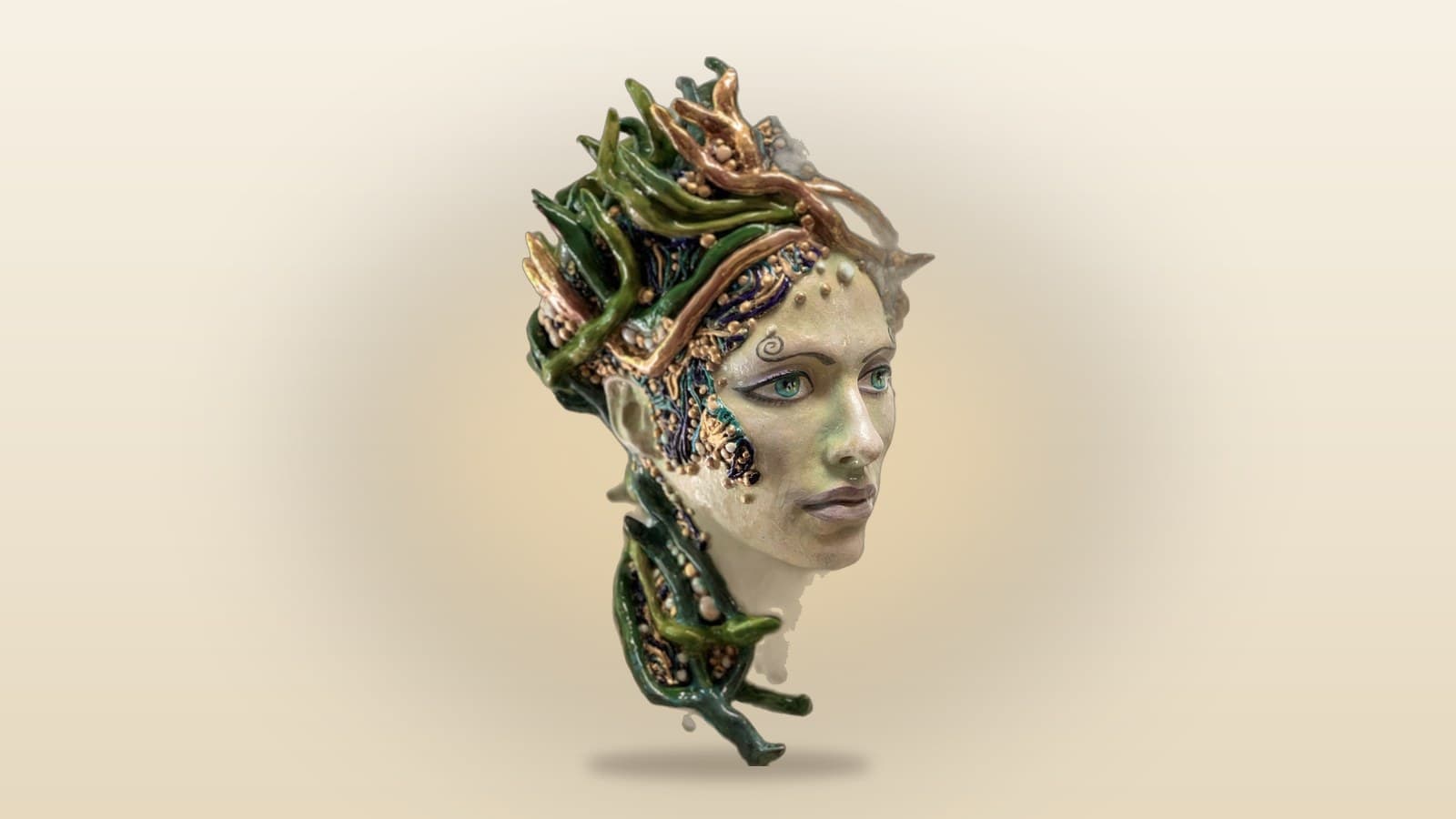
When visitors stand in front of one of my large goddesses for the first time, the question is always the same: How is this even possible in ceramic? A figure of 180 or 225 centimetres, hollow, glazed, crowned, out of clay. The honest answer is: slowly. A monumental goddess takes months, and there are no shortcuts in any of them. Let me walk you through her birth.
It begins with a myth, not with clay
Every goddess I build has been worshipped somewhere, once. Danu on the great rivers, Freya in the north, Noreia here in the lands that became Austria. Before I touch clay I spend weeks with her stories, her symbols, her animals and plants. This research decides everything: her posture, what she carries, what grows across her body. A goddess whose myth I do not understand becomes decoration. That is not my work.
Building hollow, coil by coil
The large figures are not carved and not cast. They are built hollow from coils of clay, the way vessels have been built for thousands of years. Thick rolls of heavily grogged stoneware clay are laid one on top of the other, joined, and drawn upward into walls. The walls must carry everything above them, so I can only build twenty or thirty centimetres a day; then the clay below has to stiffen before it can bear more weight. A two-metre goddess grows the way a tree does, in patient layers. While she grows, all the life comes onto her: faces, hands, serpents, antlers, blossoms, every one modelled by hand.
Why she is made of two or three parts
People sometimes think the parts are a compromise. They are simply the truth of the craft: no kiln I could ever stand in my atelier swallows a figure of two metres in one piece, and no sensible person moves one. So each goddess is designed from the first sketch as two or three sections that meet at hidden lines: a hem, a belt, a fold of her garment. Built apart, fired apart, and joining into one body when she is set up. It also means she can travel. A monumental goddess leaves my atelier in sturdy crates and is assembled where she will live.
The long patience: drying
Before any fire, months of waiting. Clay shrinks as it dries, and a wall that dries faster than its neighbour will crack. So the goddess stands wrapped in plastic and cloth, drying by millimetres, for eight to twelve weeks or longer. This is the least photogenic part of the work and the one that decides whether all the other months were in vain.
Fire, glaze, fire again
Then she goes through the fire, two to three times. The first firing turns clay into ceramic. Then glazes are layered and she is fired again, hotter, so the surfaces melt into glass and colour. Many of my goddesses receive a third firing for the finest layer of all: gold and platinum lustre on crowns, ornaments and symbols. Every firing is a held breath. The kiln gives nothing back that it takes.
Standing before her
Months after the first coil, she stands: assembled, at eye level, one of a kind. There is no mould, and there will never be a second of her. If you would like to see the goddesses who have already been born, step into the temple. And if a goddess of your own is taking shape in your mind, read how a commission works. Every one of them started as someone's quiet wish.