Aphrodite: Greek Goddess of Love
October 25, 2026
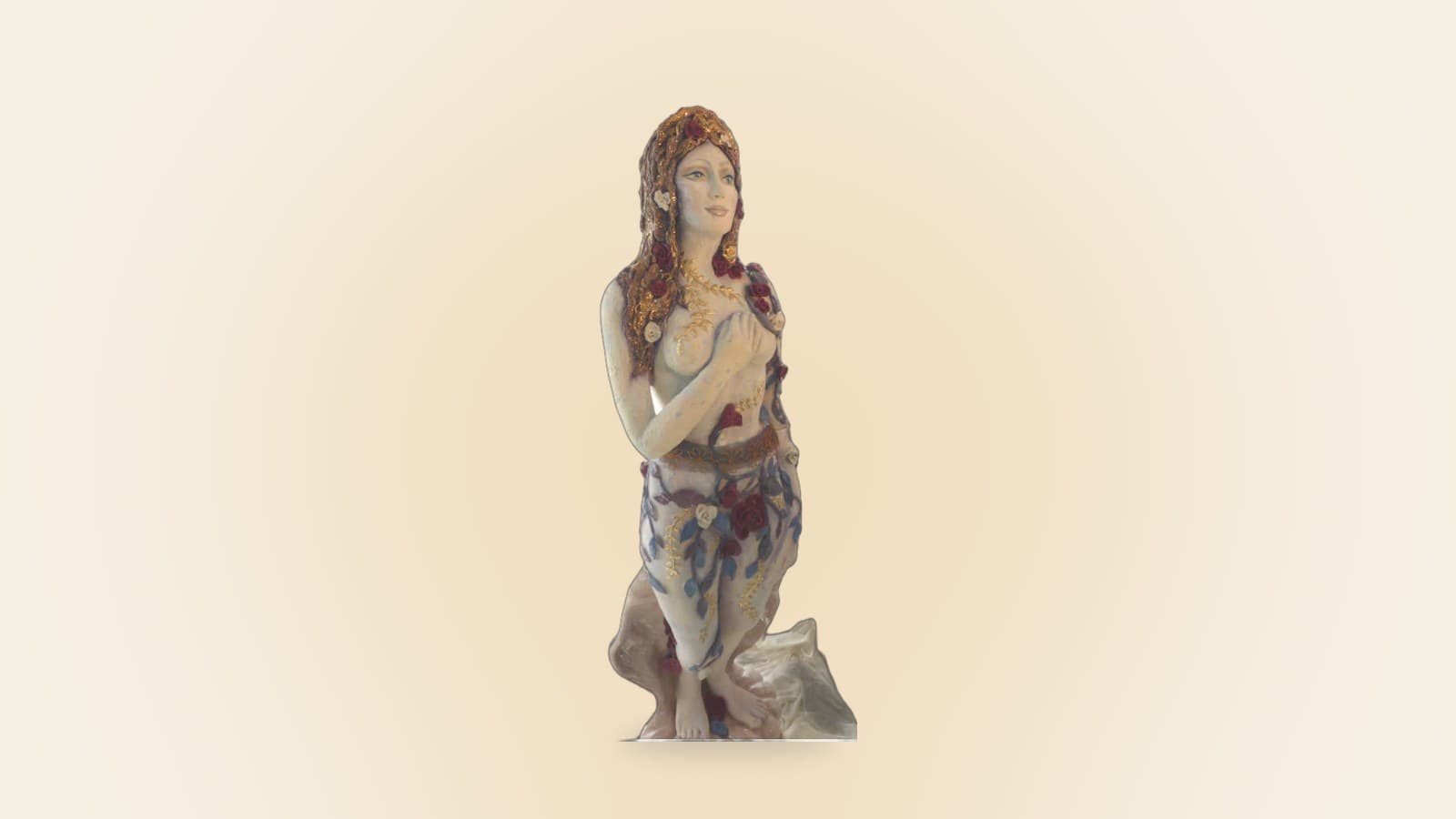
She rose from the sea. In Hesiod’s Theogony a white foam spreads on the waves, and in it a maiden grows. She comes first to Cythera, then to Cyprus, and when she steps ashore, “grass grew up about her beneath her shapely feet”. That is why, Hesiod says, gods and men call her Aphrodite, the foam-born goddess. Most modern scholars regard this explanation of her name as a folk etymology. Homer tells her birth differently: in the Iliad she is the daughter of Zeus and Dione.
Aphrodite and the power of love
Her portion, Hesiod writes, is “the whisperings of maidens and smiles and deceits with sweet delight and love and graciousness”. The Homeric Hymn to Aphrodite says that even the heart of Zeus is led astray by her. Only three goddesses resist her: Athena, Artemis and Hestia. In the Iliad she wears an embroidered band at her breast, and “therein is love, therein desire”.
The origins of Aphrodite
The Greeks themselves looked east for her origins. Herodotus calls the temple of Heavenly Aphrodite at Ascalon in Syria the oldest of all her temples, and he reports that the Cyprians say their own temple was founded from it. Many modern scholars link her to Near Eastern goddesses such as Astarte and Inanna-Ishtar. Others regard such an eastern origin as uncertain.
Aphrodite, Anchises and divine beauty
The long Homeric Hymn to Aphrodite turns her power back upon herself. Zeus makes her desire Anchises, so that she too will know love for a mortal. Before travelling to Mount Ida, she enters her sanctuary at Paphos, where the Graces bathe and anoint her. Wolves, lions, bears and leopards follow her through the mountains; she puts desire into the animals as well. The scene gives the page’s modern reading of love as a natural force a precise ancient point of reference, while remaining a particular poet’s account.
Beauty in another hymn is something that happens through adornment. In Homeric Hymn 6, the Seasons welcome Aphrodite to Cyprus, dress her and place jewellery on her head, ears and neck before taking her among the gods. Clothing and ornament are part of her divine appearance. Read beside the later nude statues, the passage opens a broader way of looking: Aphrodite’s presence can be expressed through what surrounds and adorns her body as well as through the body itself.
Aphrodite worship and armed images
Her places of worship extend that range. The Getty’s account describes a goddess approached for marriage, fertility, civic order and safe sailing as well as sexual desire. At the port of Gravisca, dedications by sailors and merchants were found in her shrine. Two helmeted bronze female figures from that sanctuary may represent an armed Aphrodite. The identification remains qualified, but the setting makes clear why a goddess associated with union could matter to people facing a sea crossing and the uncertainties of trade.
Pausanias records more definite armed images in other sanctuaries. At Cythera he describes a wooden image of Aphrodite Urania, or Heavenly Aphrodite, carrying arms. On the Acrocorinth he lists an armed Aphrodite alongside Helios and Eros with a bow. These local descriptions complicate any tidy division between a gentle goddess of love and a violent world outside her concern. They also show why a title or an attribute should be read in its own setting, rather than treated as a complete definition of Aphrodite everywhere.
Aphrodite in sculpture
Sculpture makes the act of looking part of the subject. In the Getty’s account of the Knidian figure, Aphrodite lifts clothing above a water vessel with one hand and places the other before her genitals. The museum suggests that this apparently concealing gesture may draw attention to her sexual power. Later images vary the bathing theme, including a crouching goddess and a figure wringing out her hair. These are different artistic solutions, without prescribing every later Aphrodite’s appearance.
Frequently asked questions
What is Aphrodite the goddess of?
Of love, desire and beauty. Hesiod gives her “the whisperings of maidens and smiles” and “sweet delight” as her portion among gods and men. Scholarly overviews name Cythera, Cyprus, Corinth and Athens as her main cult centres.
Who were Aphrodite’s lovers?
Ares is her lover in Homer’s Odyssey. There she is married to Hephaestus, the smith god, but she lies with Ares in secret in her husband’s house. Hephaestus forges bonds “fine as spiders’ webs” to catch the two. Hesiod says that she bore Ares Panic and Fear. Among mortals she loved Anchises, the herdsman of Mount Ida, and in later tradition Adonis.
What is Aphrodite called in Roman mythology?
Venus. The Romans identified Aphrodite with their goddess Venus, who according to scholarly overviews was originally a goddess of agricultural fertility, vegetation and springtime.
What was Aphrodite’s weakness?
In Iliad 5, Diomedes wounds her hand while she is protecting Aeneas. Apollo takes over the rescue, and Aphrodite withdraws in pain. This is a vulnerability shown in a particular battle scene. It should be read beside evidence for her wider cult roles, rather than made into a universal rule about her powers.
Was Aphrodite’s beauty always represented by a nude body?
No. Homeric Hymn 6 presents her dressed and adorned by the Seasons. The Getty discusses several later sculptural forms, including bathing figures. These examples establish no compulsory body shape.
What was Aphrodite’s curse?
A useful answer needs a named story. In Iliad 3, Aphrodite threatens Helen when Helen resists going to Paris: the goddess may turn her love into hatred and bring hostility upon her. That passage is a threat within the Trojan narrative, not the name of a universal curse attached to Aphrodite.
See the sculpture: Aphrodite
Sources
- Hesiod, Theogony 176-206 and 933, translated by H. G. Evelyn-White (Theoi Classical Texts Library)
- Homeric Hymns 5 and 6 to Aphrodite, translated by H. G. Evelyn-White (Theoi Classical Texts Library)
- Homer, Iliad 14.214-217: the embroidered band, translated by A. T. Murray (Perseus Digital Library)
- Homer, Iliad 5.311-370: Aphrodite, daughter of Zeus and Dione, translated by A. T. Murray (Theoi)
- Homer, Odyssey 8.266-281: Ares, Aphrodite and Hephaestus, translated by A. T. Murray (Perseus Digital Library)
- Herodotus, Histories 1.105: the temple of Heavenly Aphrodite at Ascalon, translated by A. D. Godley (Perseus Digital Library)
- Apollodorus, Library 1.3.1: Aphrodite as daughter of Zeus and Dione, translated by J. G. Frazer (Theoi Classical Texts Library)
- Aphrodite: scholarly overview of her name, origins, cult centres, lovers and Venus (Wikipedia)
- Sculpture facts: atelier RHEAsilvia
- Getty, Worshipping Aphrodite: civic roles, sailing and Gravisca
- Pausanias, Description of Greece 3.23.1: Cythera, translated by W. H. S. Jones (Theoi)
- Pausanias, Description of Greece 2.5.1: Acrocorinth, translated by W. H. S. Jones (Theoi)
- Getty, The Goddess of Love and Beauty: sculptural figure types
- Homer, Iliad 3.383 to 420: Aphrodite and Helen, translated by A. T. Murray (Theoi)