The White Goddess: Robert Graves and Poetry
October 25, 2026
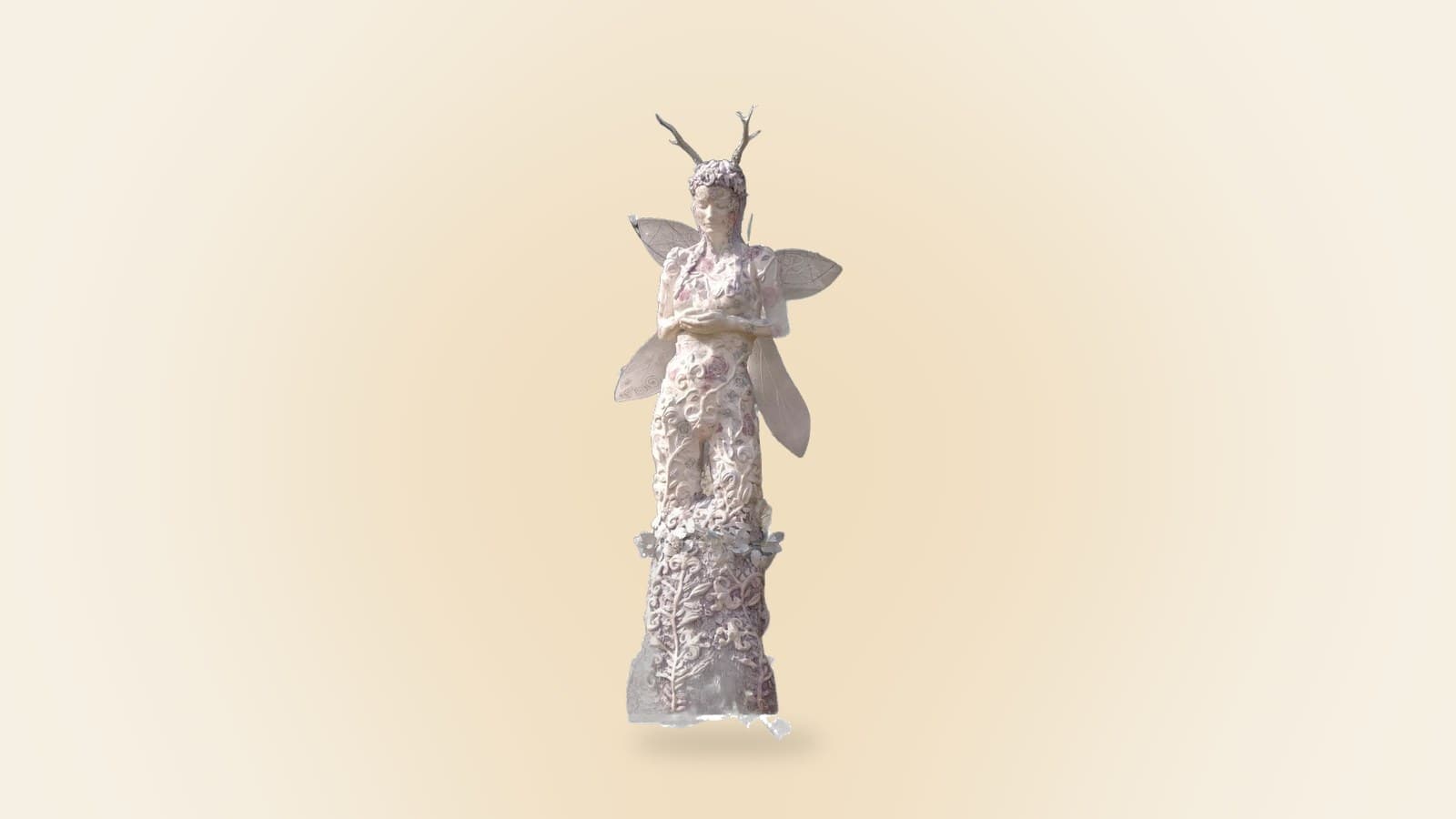
The White Goddess belongs first to the imagination of a modern poet. Robert Graves published The White Goddess: A Historical Grammar of Poetic Myth in 1948. Its subtitle promises a way of reading the language beneath myths; its central figure gathers poetry, desire, birth and death into a female divine presence. This is Graves’s literary synthesis, rather than the recovered biography of a single ancient deity. Approaching RHEAsilvia’s White Goddess through that distinction allows the title to carry its imaginative force while keeping the history of the idea visible.
What does White Goddess mean?
Here, White Goddess is the English title of Graves’s modern poetic synthesis, rather than the name of a single ancient goddess whose identity and cult his book securely reconstructs. “White” is especially important because it resists a simple equation with innocence. Robert A. Davis’s study of Graves follows its conflicting associations through radiance, snow, ice, ghostliness and loss. Read in that light, the title holds attraction and unease together. The colour can suggest an overwhelming presence or the place where a presence has vanished. Those are meanings in Graves’s writing and its criticism, not descriptions of the ceramic surface.
Robert Graves’s theory of poetic myth
Graves’s subtitle also needs careful reading. A grammar normally explains how language works; here it proposes correspondences through which poems and myths become intelligible to one another. Selma Karayalçın’s study describes a theory in which poetic inspiration depends upon belief in the Goddess, within a supposed early society centred on women. Her account stresses that such a prehistoric social order remains unproven. We can therefore read the book as an ambitious argument about inspiration without accepting its reconstruction of European religion as a historical fact.
Welsh literature supplies some of the book’s starting points. Its contents move from The Battle of the Trees to Gwion’s Riddle and chapters on a tree alphabet. The sequence matters: a poem, an enigmatic speaking voice and the ordering of letters become parts of the same interpretive enterprise. The bibliography maintained by the Robert Graves project documents that architecture in the first edition. It shows the scope of the enquiry, but a table of contents is not corroboration of the proposed ancient system. The connections still belong to Graves’s argument.
The same caution applies to the many names his Goddess absorbs. Karayalçın examines the way Graves’s poetic theory shapes his handling of inherited material, including his prose and translations. A modern synthesis may make separate stories speak to one another, yet that achievement does not erase their separate origins. For this page, the White Goddess is best understood as a figure made through the act of interpretation. Her apparent unity tells us about the author’s search for a source of poetry; it cannot by itself establish that all earlier worshippers recognised the same being.
The White Goddess poem and the Muse
The poem called The White Goddess turns that search into a journey. Its speakers pursue the desired figure through remote and threatening places, including volcanic heights and pack ice. The landscape offers no comfortable homecoming. As a close reading, the movement suggests that inspiration requires departure from ordinary certainty, while the poem’s ending retains the possibility of further harm. This is a literary encounter with a dangerous Muse. Neither the journey nor its locations should be read as a documented pilgrimage route or a map of ancient sanctuaries.
The Muse is also a problem of power. In David Constantine’s reading, Graves repeatedly places love and terror together: the poet desires the figure who may also cause him suffering. Constantine challenges the restriction of poetic truth to that particular kind of experience. His criticism makes room for two responses at once, admiration for the intensity of the poems and disagreement with their exclusive theory of inspiration. A reader can be moved by a divine image without accepting it as a complete explanation of creativity or of relationships between women and men.
Moon symbolism and the modern goddess
Anne Mounic offers a different critical emphasis. Her essay reads Graves’s lunar imagery through change, decline and renewed life, and treats the work as an attempt to give experience a meaningful shape. In that interpretation, myth becomes a means of thinking through conflict. The moon is useful because it changes visibly while returning. This remains a critic’s account of a modern writer. It gives us a vocabulary for reading transformation in literature, rather than proof that a single lunar religion once united the societies whose stories Graves collected.
The broader reception belongs to the history of modern ideas about goddesses. Ronald Hutton traces the convergence of moon, earth and an encompassing female divinity through nineteenth-century literature and scholarship, before placing Graves within that development. His account also explains how archaeological confidence in a universal prehistoric goddess later gave way to greater uncertainty. That history matters here: a powerful modern image can shape what people expect to find in the past. Its influence is evidence of cultural importance, while the archaeological claims still require independent support.
The White Goddess in criticism and ballet
The book’s continuing literary interest is visible in Fran Brearton’s British Academy lecture. Its published abstract places the work across literary studies, anthropology and Celtic studies, and describes it as both useful and obstructive when approaching Graves. That double response suits a book whose imaginative connections can illuminate a poet while complicating historical enquiry. The abstract is only a summary, so it should not be made to stand for arguments unavailable there. Even at that level, it records serious critical engagement rather than an uncomplicated endorsement of the book’s thesis.
The White Goddess also moved into performance. The Graves bibliography records a ballet based on the book at Covent Garden in 1983, while Richard Hudson’s professional credits list The White Goddess for the Royal Ballet School in that year. These records provide a specific instance of reception beyond the printed page. They do not establish a connection with Steiger’s sculpture. As a modern editorial observation, a literary figure’s passage into dance makes the act of embodiment particularly clear: artists select a form through which an elusive imagined presence can be encountered.
Frequently asked questions
Who is the White Goddess?
In Robert Graves’s work she is a modern literary synthesis concerned with the divine source of poetry. The 1948 book draws together material from several traditions. This synthesis should be distinguished from individual ancient goddesses, even when their names can also be translated as White Goddess.
Why is she called white?
The title is descriptive. Davis’s study finds that whiteness in Graves can evoke radiance but also ice, absence and death. It therefore carries more than a reassuring idea of purity. These literary associations do not establish the colour or finish of Steiger’s sculpture.
Is The White Goddess reliable ancient history?
It should be read critically as a modern work of mythmaking and poetic theory. Karayalçın distinguishes its assumptions about prehistoric society from demonstrated history; Hutton places the encompassing modern goddess within the development of literature and scholarship. An inspiring argument is not independent evidence for its own reconstruction.
Is the White Goddess simply a triple goddess?
Triplicity is part of Graves’s system, whose first-edition contents include The Triple Muse. It should not become a universal key applied automatically to every group of three female figures. The literary system and the evidence for any particular ancient group need to be considered separately.
How does the sculpture relate to the book?
Directly: RHEAsilvia names Graves’s book The White Goddess as the work that inspired this sculpture. The atelier describes it as a monumental winged ceramic figure.
See the sculpture: White Goddess
Sources
- Robert Graves project, bibliography A61: The White Goddess, first edition and subsequent reception
- Robert Graves, The White Goddess, primary text: foreword and chapter structure; online transcription has OCR errors
- Robert Graves, The White Goddess, poem, in collected poems PDF, printed page 174
- Robert A. Davis, The Origin, Evolution, and Function of the Myth of The White Goddess in the Writings of Robert Graves, University of Stirling, 1987, conclusion, pp. 399 onward
- Selma Karayalçın, Representations of the Muse in the Writings of Robert Graves, 2011, synopsis and study of the prose works
- David Constantine, “A grace it had, devouring”: Apparitions of Beauty, Love and Terror in the Poetry of Robert Graves, The Robert Graves Review
- Anne Mounic, The White Goddess, or the poetry of poetry, The Robert Graves Review
- Ronald Hutton, The Modern Goddess, Gresham College lecture and transcript, 2025
- Fran Brearton, Robert Graves and The White Goddess, British Academy 2004 Lectures, published 2005, publicly accessible abstract
- United Agents, Richard Hudson, production credits: The White Goddess, Royal Ballet School, 1983
- Sculpture facts: atelier RHEAsilvia