Frau Holle: Fairy Tale and Folk Belief
October 25, 2026
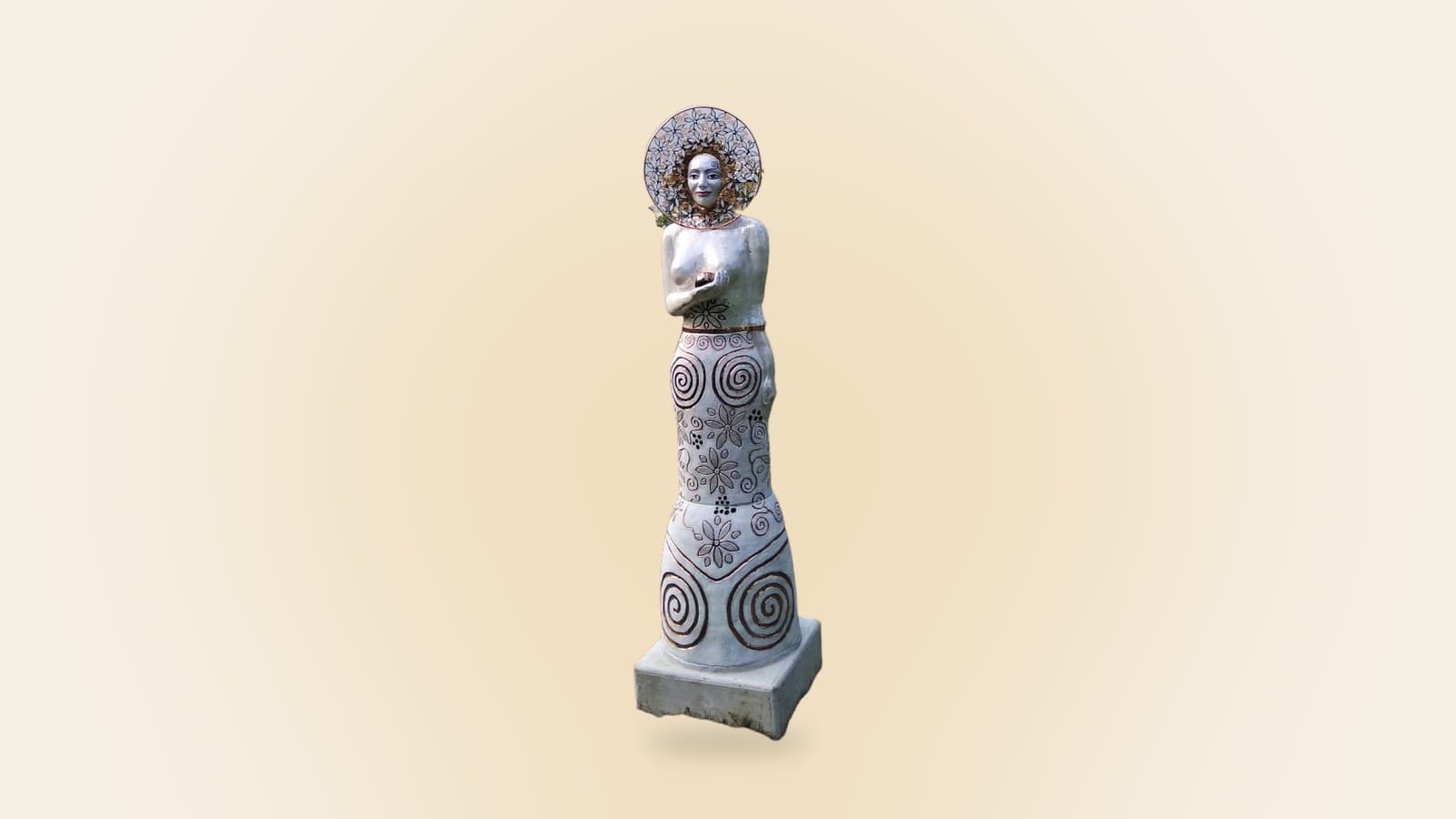
When it snows, Frau Holle is making her bed and the feathers are flying: that is how the old saying goes, as Jacob Grimm recorded it. The Brothers Grimm printed her story in 1812 as number 24 of their Children’s and Household Tales: the girl who falls through the well into a land below, takes the bread from the oven, shakes the apple tree, serves Frau Holle faithfully and is showered with gold.
Holda, spinning and the Twelve Nights
Holle is older than the tale. A thirteenth-century church text, quoted in later scholarship, describes people setting a Christmas-night table for the “queen of heaven, whom the common people call Lady Holda”. Jacob Grimm gathered her legends in his German Mythology and called her a friendly, gentle, gracious goddess: lady of spinning and of household order, who makes it snow when she makes her bed, and who goes about in the Twelve Nights of midwinter, rewarding diligent spinners and punishing lazy ones. Whether she was worshipped as a goddess before Christianity is still debated; that she lived on in folk belief is not.
Frau Holle’s well on the Hoher Meißner
Holle loves lakes and wells. On the Hoher Meißner in Hesse, the Grimms recorded that newborn children come from her well and that women who step into it become healthy and fertile. In this interpretation she is the grandmother face of the goddess: stern, warm and just.
The Grimm tale in 1812 and 1857
The familiar tale changed between editions. In 1812 the girl falls into the well while drawing water. In the 1857 text she spins until her fingers bleed, drops the bloodied reel into the water while trying to clean it, and jumps after it at her stepmother’s command. D. L. Ashliman’s comparison places the two versions side by side. The difference matters because spinning, so prominent in Holle’s regional legends, is not the cause of the first girl’s descent in the first edition. Both versions should be named accurately rather than blended into an imaginary original.
Holle’s first appearance also complicates the idea of a wholly comforting grandmother. The girl is afraid of the old woman’s large teeth and wants to run away. Holle answers reassuringly and offers good treatment in return for orderly work. Once the girl enters her service, she has good food and hears no harsh words. In a modern reading, the scene asks the reader to look beyond a frightening appearance without erasing it. This is a feature of the tale’s encounter, not a physical description to be transferred to RHEAsilvia’s sculpture.
The return home gives the encounter a second turning point. The girl becomes homesick although Holle’s household treats her better than her own. Holle does not punish her for wanting to leave. She leads her to a gate, where the gold falls as a reward for faithful service. The other girl later repeats the route for the sake of that reward but refuses the requests for help and neglects her work. Holle dismisses her under a shower of pitch, which remains on her for life. The two departures make recognition and consequence visible.
Frau Holle and the legends of spinners
The Meißner legend gives those consequences the tools of a working household. The Grimms say that Holle tangles the yarn or spoils the distaff of lazy spinners, while diligent ones receive spindles and find their bobbins filled after she has spun for them overnight. The distinction is more specific than a general reward for being good. It concerns tasks, materials and care. As a modern editorial comparison, this attention to sustained making can accompany the sculpture’s existing connection with patient work, without claiming that an old legend describes ceramic practice.
Holle’s pond and the meaning of Holda
The same collection also preserves a Holle who cannot be contained within a nursery story. At her pond she may appear as a beautiful white woman, or remain invisible while bells and a dark rushing sound come from below. The legend also places her at the head of a frightening host. These are reported local beliefs in the Grimms’ 1816 collection. They supply a reception of Holle tied to a named Hessian place, not proof that every feature belonged to one pre-Christian goddess or that a historically documented temple stood there.
Even the name needs an attributed explanation. Jacob Grimm connects Holda with the German adjective hold, meaning gracious or favourably disposed, and uses that connection in his portrayal of a benevolent goddess. This tells us how Grimm interpreted the name. It should not be turned into a claim that every frightening Holle story is a later mistake. Alongside his interpretation stand the tale’s teeth, the pitch punishment and the pond legend’s unsettling sounds. In a modern reading, the ceramic Holle can hold that tension between welcome and severity without needing an invented historical costume or ritual object.
Frequently asked questions
What is Frau Holle the goddess of?
In folk tradition she rules over spinning and household order, winter and snow, and lakes and wells; children were said to come from her well. Jacob Grimm described her as a gentle, gracious goddess. Whether she was worshipped as a goddess before Christianity is debated among scholars.
What is Frau Holle called in English?
Mother Holle or Mother Hulda. In older sources she is also called Holda or Hulda.
Is Frau Holle only a fairy tale?
No. The Grimm tale of 1812 is the best-known version, but a thirteenth-century church text quoted in later scholarship already names her, and she appears in many regional legends, for example on the Hoher Meißner in Hesse.
Why does Frau Holle make it snow?
In the Grimm tale, the girl must shake out Frau Holle’s bed well, “so that the feathers fly; then it snows in the world”. Recorded folk belief says the same: when it snows, Holle is making her bed.
Is Frau Holle the same as Perchta?
They are related figures of midwinter. Jacob Grimm noted that Perchta is known in the Upper German regions, including Austria and Bavaria, where the legends of Holda leave off.
Does Frau Holle reward kindness or hard work?
The tale shows both. The first girl helps the bread and apple tree before entering Holle’s service, then keeps her household faithfully. A modern moral reading can connect attentiveness with diligence. It need not treat the tale as a single rule about productivity.
How does Frau Holle end?
In the 1812 tale the diligent girl returns covered in gold. The other girl refuses help and neglects her service, then receives pitch instead. The text says that the pitch remains on her for the rest of her life.
Why does the 1812 tale begin with a bucket and the 1857 tale with a spinning reel?
The opening changed. The 1812 girl falls while fetching water. In 1857 she loses her spinning reel in the well and is ordered to retrieve it. Naming the edition avoids merging these two beginnings.
Is the Frau-Holle-Teich evidence of an ancient temple?
The Grimms’ 1816 text records a named pond and stories attached to it. That documents a place in Holle’s collected folklore. The passage does not establish an excavated temple or an uninterrupted sequence of worship from pre-Christian times.
See the sculpture: Holle
Sources
- Brothers Grimm, Kinder- und Haus-Märchen, vol. 1 (1812), no. 24 “Frau Holle” (Wikisource))
- Brothers Grimm, Deutsche Sagen, vol. 1 (1816), no. 4 “Frau Hollen Teich” (Wikisource)
- Jacob Grimm, Deutsche Mythologie, chapter XIII “Göttinnen” (Projekt Gutenberg)
- Frau Holle, overview with the thirteenth-century text and scholarship (Wikipedia)
- Sculpture facts: atelier RHEAsilvia
- Brothers Grimm, Frau Holle, final edition of Kinder- und Hausmärchen, 1857, no. 24: the spinning opening and return)
- D. L. Ashliman, Frau Holle: comparison of the 1812 and 1857 versions, University of Pittsburgh